the collections
Currently 10 Collections are Available for Exhibition
3. Witness to Faith: Sadao Watanabe
6. Cardboard Chronicles: Rudolph Bostic
9. Unto Us a Child is Born NEW!
10. Journey to the Resurrection:
Through the Eyes of Children
11. Jesus the Good Shepherd and Lamb of God
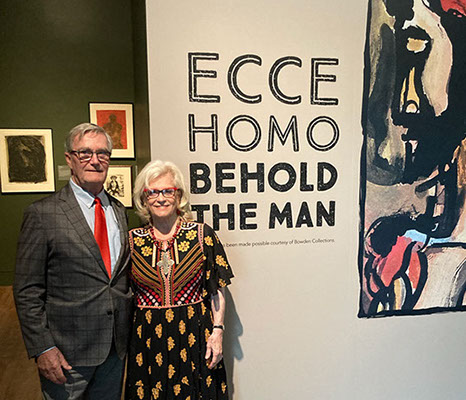
Bob and Sandra at the Museum of the Bible exhibition, Feb. 2024.
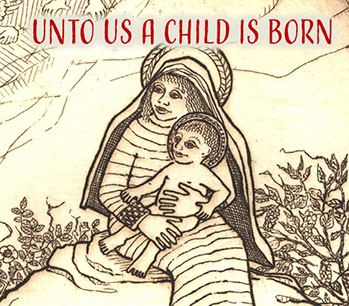
NEW IN 2026
Unto Us a Child Is Born, is an exhibition of artists, primarily from the 20th century, who have been moved by the profound mystery that surrounds the birth of our Savior. Most of the images are small works which require us to come close ... to engage with the intimacy of each piece. A majority of the artists are American but a Greek icon of the Madonna of Tenderness, an Egyptian papyrus painting of the Flight into Egypt, the charming wood engraving by the Russian/French artist Jean Lebedeff, and the Panamanian mola all expand the geographical circle of the nativity works.
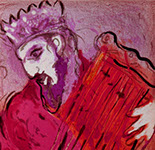
Marc Chagall (1877–1985) is perhaps the foremost visual interpreter of the Bible in the 20th Century. His art is filled with his own reoccurring symbols of visual memory and imagination. He said he did not see the Bible, but he dreamed it, even as a child. Chagall’s vision of the Old Testament combines his Jewish heritage and modern art giving us a rich display of symbol and imagination.
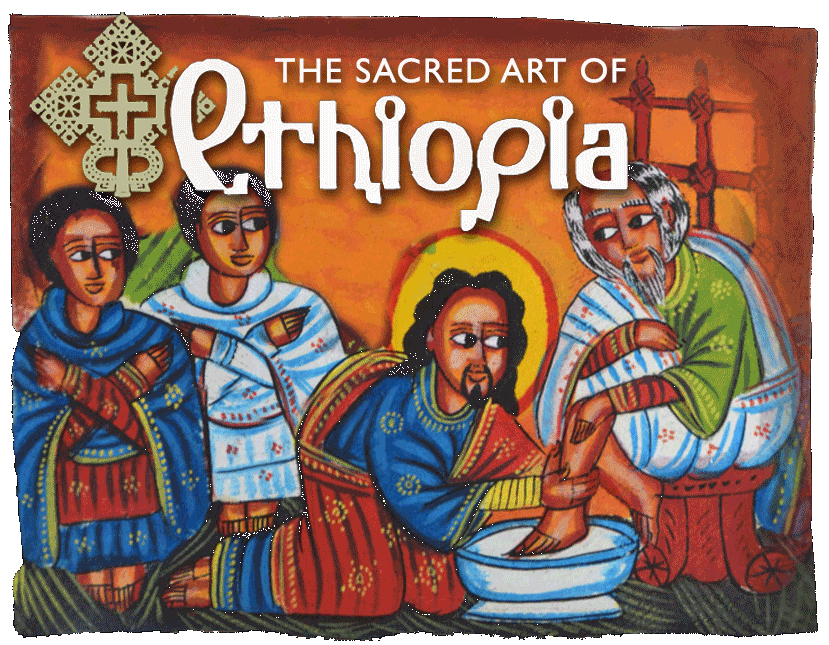
Ethiopia is one of the oldest Christian civilizations in the world. Even today, more than half of Ethiopians identify as Christian and are still creating religious objects similar to those done centuries ago. The Sacred Art of Ethiopia is organized to familiarize ourselves and celebrate Ethiopia’s rich artistic heritage exhibition.
One of the highlights of the show is a hundred year old painting on leather of the Virgin Mary and Her Beloved Son surrounded by stories from the life of Jesus.

Watanabe's chief desire was to create art that could be enjoyed by common people and displayed in ordinary settings. Witness to Faith hopes to help fulfill his wishes by offering for view some of his original momigami (wrinkled paper) and washi (Japanese paper) prints, calendars that have been printed since the early 1970s, and stencil Christmas cards he made for friends. May these be a true Witness to Faith.
GO TO COLLECTION
This show has 40 stunning molas from the San Blas Islands off the coast of Panama that tell the story of the Bible, from the Garden of Eden to the Ascension of Jesus into Heaven. Molas are panels of reversed embroidery originally applied to the front and back of the Cuna women's blouses. Each mola is a beautifully designed interpretation of biblical stories with whimsical treatments and tender insights.


“God is dead…And we have killed him.”
—Nietzsche, The Gay Science, 1882
In the first decades of the twentieth century, the writings of the atheistic philosopher Friedrich Nietzsche were a powerful inspiration for the artistic and literary avant-garde communities in Berlin, Dresden, and Munich. His exuberant affirmation of the “vital forces” of life, anti-authoritarian iconoclasm, and withering condemnation of Christianity inspired artists and writers in their search for a new future that would liberate humanity from the suffocating aesthetic, cultural, political, and religious conventions derived from the Judeo-Christian tradition.
This show brings together twenty-three paintings from one of America’s most amazing self-taught artists. His vibrant images, rendered in enamel and house paint with a shimmering glossy finish on cardboard and his flamboyant use of color put him in a category all his own.
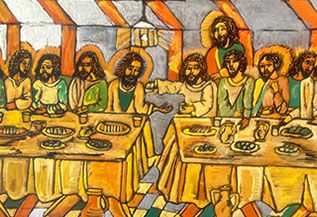

The table invites us to gather with family and friends, but also with those of common faith around the table of our Lord. It's one of the foremost places of human connection. It is a rich biblical metaphor, a place of gathering, a place of blessing, and a place where we share and serve.
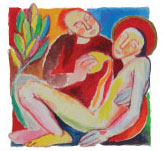
Who is my Neighbor? Visual Insights from the Good Samaritan offers the viewer numerous opportunities to see this story anew, through the eyes of twenty-two artists spread across the last four centuries.
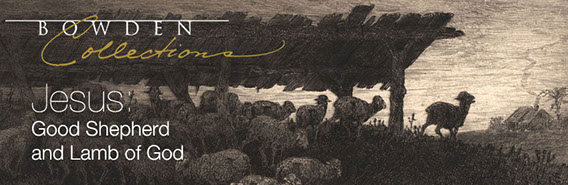
Jesus: Good Shepherd and Lamb of God
The exhibition, Jesus: Good Shepherd and Lamb of God, with 34 drawings, paintings, original prints, sculptures and photographs explores through the eye of the artist, how this theological concept has been interpreted from the 17th century to the present. This display includes artists from the Philippines, Japan, Bulgaria, England, Germany, Slovakia, Italy, Netherlands, Israel, Argentina, Greece, and the United States.
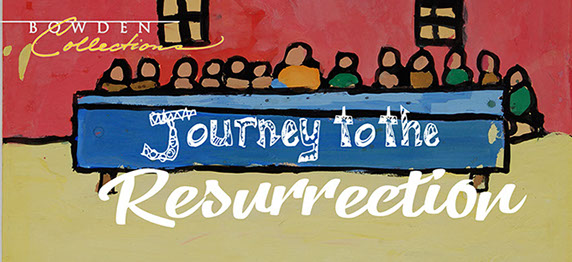
Through the Eyes of Children
Journey to the Resurrection: Through the Eyes of Children is a collection of 18 tempera painting created by 6th graders in an upstate New York Christian school in 1980. They studied the work of Georges Rouault and then implemented his technique using black outlines to give structure to the images … much like stained glass windows.
The colors are bright. The sequence is not the traditional stations of the cross, but depictions of 18 events as they unfold though the Passion, but continue to delightful interpretation of the Resurrection.
® 2026 ALL RIGHTS RESERVED | design by www.isleydesign.com